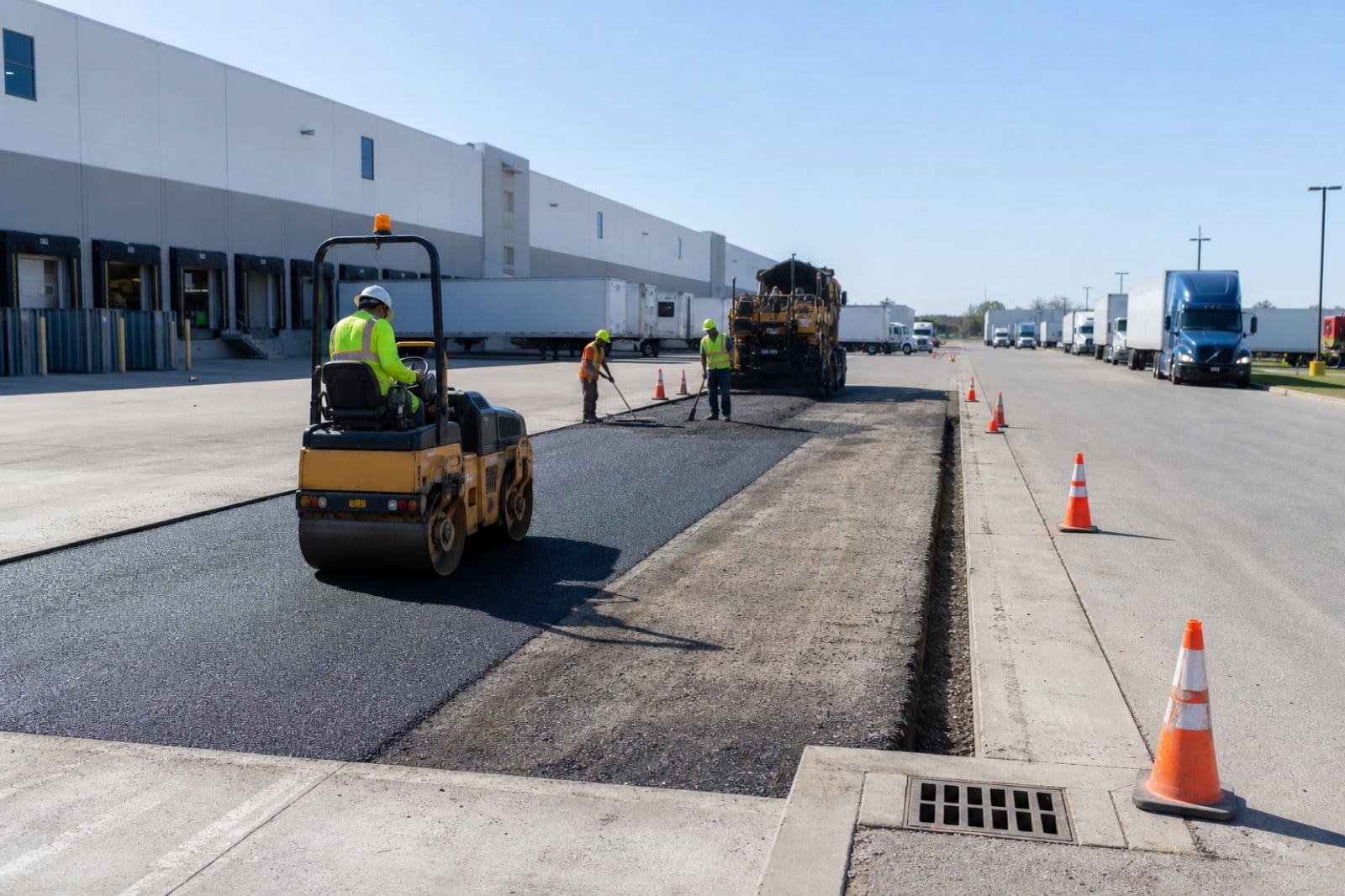
Commercial asphalt repair matched to the failure beneath the tires.
A pothole, settlement, broken edge, or spreading crack can be a surface problem—or evidence of failed base, drainage, utility work, heavy turning loads, or a poor transition. Meadow helps commercial property teams separate localized repair from broader repaving and coordinate asphalt with concrete, drainage, striping, access, and active traffic.
05Concrete curbs, gutters, aprons, sidewalks, ramps, and adjacent repairs
06Barricades, traffic phasing, curing, striping restoration, and reopening sequence
Define the full property outcome before work starts.
Treat the cause at the right depth
A thin surface patch will not correct unstable base, trapped water, settlement, or repeated heavy-load failure. The repair depth and limits should reflect what is actually moving or deteriorated.
Protect circulation
Truck turns, fire lanes, customer entrances, tenant access, delivery windows, pedestrian routes, and cure time determine whether the work needs zones, off-hours execution, or temporary routing.
Make the repair part of the pavement plan
Mapping repeat failures and repair dates helps distinguish isolated corrective work from a lot that is approaching larger milling, overlay, or full-depth replacement.
BUYER QUESTIONS
Questions about this commercial property need.
What is the difference between asphalt repair and repaving?+
Repair addresses defined failed areas or causes. Repaving treats a broader surface or pavement section. The right choice depends on how widespread the distress is and whether the base and drainage can support the proposed surface treatment.
Can asphalt repairs be phased around commercial traffic?+
Usually, if the site has workable alternate routes and the sequence accounts for trucks, fire access, customers, deliveries, pedestrians, cure time, and final markings.
Why do the same potholes sometimes return?+
Recurring failure can point to water, weak base, utility settlement, inadequate thickness, poor edge bonding, or heavy turning and braking loads. Repeating the same surface patch may not correct the underlying condition.
Send the address, affected area, photos, traffic type, known drainage or utility history, approximate dimensions, operating hours, and how long the area can be closed.