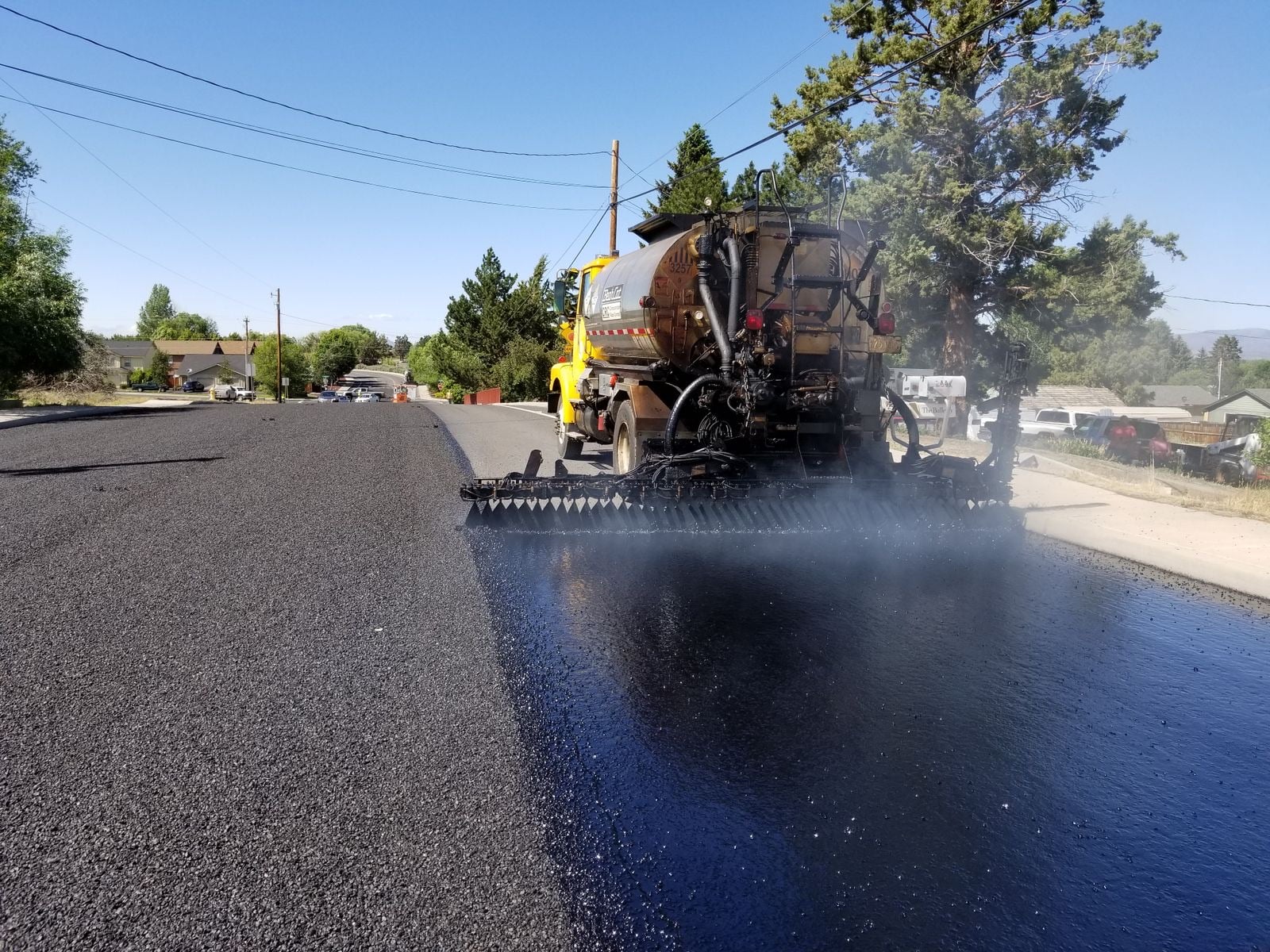
Commercial parking lot repaving that keeps traffic, drainage, and phasing connected.
A durable parking-lot project begins with why the pavement failed and how the property must operate during construction. Meadow coordinates pavement strategy with drainage, base conditions, concrete, accessibility, striping, loading patterns, tenant access, and sequencing.
Commercial properties onlyBuilt around facility responsibility
One accountable relationshipFrom request through completion
Scope before assumptionsProperty conditions and constraints matter
Repaving and site-work scope
01Condition mapping, traffic patterns, heavy-load areas, and failure history
02Patching, milling and overlay, full-depth replacement, and base correction
03Catch basins, drainage paths, low spots, curbs, gutters, and transitions
04Walks, ramps, islands, aprons, loading areas, and accessibility details
05Striping, markings, signage, wheel stops, and traffic flow
06Phasing, barricades, tenant communication, deliveries, and curing time
Define the full property outcome before work starts.
Match treatment to failure
Surface distress, base failure, poor drainage, utility settlement, and heavy turning loads require different corrections.
Keep the property usable
Retail traffic, truck routes, employee parking, fire access, deliveries, and adjacent tenants shape the phasing plan.
Coordinate final surfaces
Drainage elevations, concrete transitions, accessible routes, striping layout, and cure time should be resolved before paving begins.
BUYER QUESTIONS
Questions about this commercial property need.
Is milling and overlay enough for a failing parking lot?+
Only when the underlying pavement and base can support it. Repeated settlement, alligator cracking, drainage problems, or heavy-load failures may require deeper correction.
Can a busy lot remain open during repaving?+
Often through phasing, but the feasible sequence depends on traffic, truck movements, fire access, entrances, tenants, curing, striping, and site geometry.
Should concrete and drainage be included in the paving scope?+
They should at least be evaluated. Curbs, gutters, walks, aprons, catch basins, and transitions often determine how the finished pavement performs.