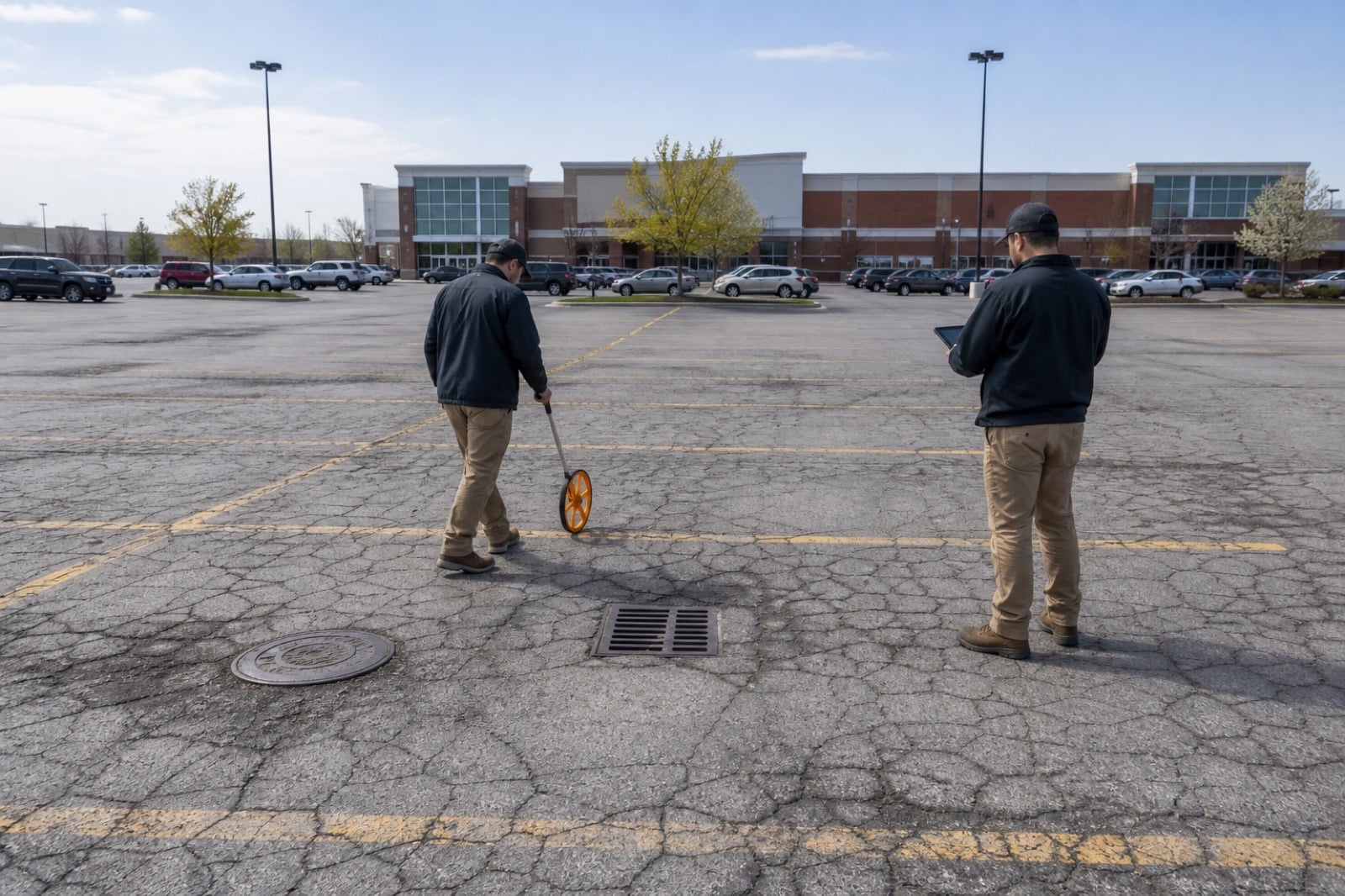
Commercial parking lot replacement cost: what changes the number before bids arrive.
Price per square foot is only meaningful after the square feet and treatment are correctly defined. A realistic parking-lot budget separates surface work from full-depth areas, measures base and drainage risk, accounts for commercial traffic and phasing, and includes the concrete, markings, access, and site restoration needed to reopen the property.
Editorial and technical review: Meadow Services operating team · August 17, 2026
05Traffic control, truck loading, work hours, phases, mobilizations, and temporary access
06Asphalt mix, escalation, permits, testing, striping, signage, landscaping, and closeout
How to use this planning guidance.
Measure by treatment zone
Do not apply one unit price across sound pavement, failed base, truck lanes, utility cuts, drainage corrections, and concrete transitions. Each zone can require a different sequence and depth.
Price the operating plan
More phases, weekend or night work, repeated mobilization, temporary striping, access maintenance, and protection of deliveries or customers can materially change cost.
Carry uncertainty honestly
Hidden base conditions, buried utilities, unstable soils, drainage elevations, and code or accessibility changes may not be resolved from a visual walk. A useful budget states allowances, assumptions, and investigation still needed.
EDITORIAL METHOD
Planning guidance, not a substitute for the project record.
This guide helps a commercial property team organize a request and the next decision. Actual site conditions, adopted codes, manufacturer instructions, permits, contracts, qualified assessments, and approved project documents control the work.
BUYER QUESTIONS
Questions to resolve before the next decision.
Why can parking lot replacement bids vary so much?+
The proposals may use different measured areas, pavement depths, base-repair assumptions, drainage scope, concrete quantities, asphalt mix, phasing, traffic control, striping, testing, permits, or exclusions. Compare normalized scope before totals.
Is milling and overlay cheaper than full replacement?+
It generally involves less removal and base work, but it is only suitable where the remaining pavement and base can support the new surface. Widespread structural cracking, settlement, or drainage failure can make a surface-only approach poor value.
Can Meadow give an exact cost from photos?+
Photos can support an early conversation, not a dependable final quantity and treatment plan. Accurate pricing typically requires measurement, field condition review, access and phasing information, and clear assumptions for concealed conditions.
Send the address, site plan or approximate area, photos, pavement age, truck and customer use, drainage issues, repair history, closure limits, desired timing, and the budget decision the estimate must support.