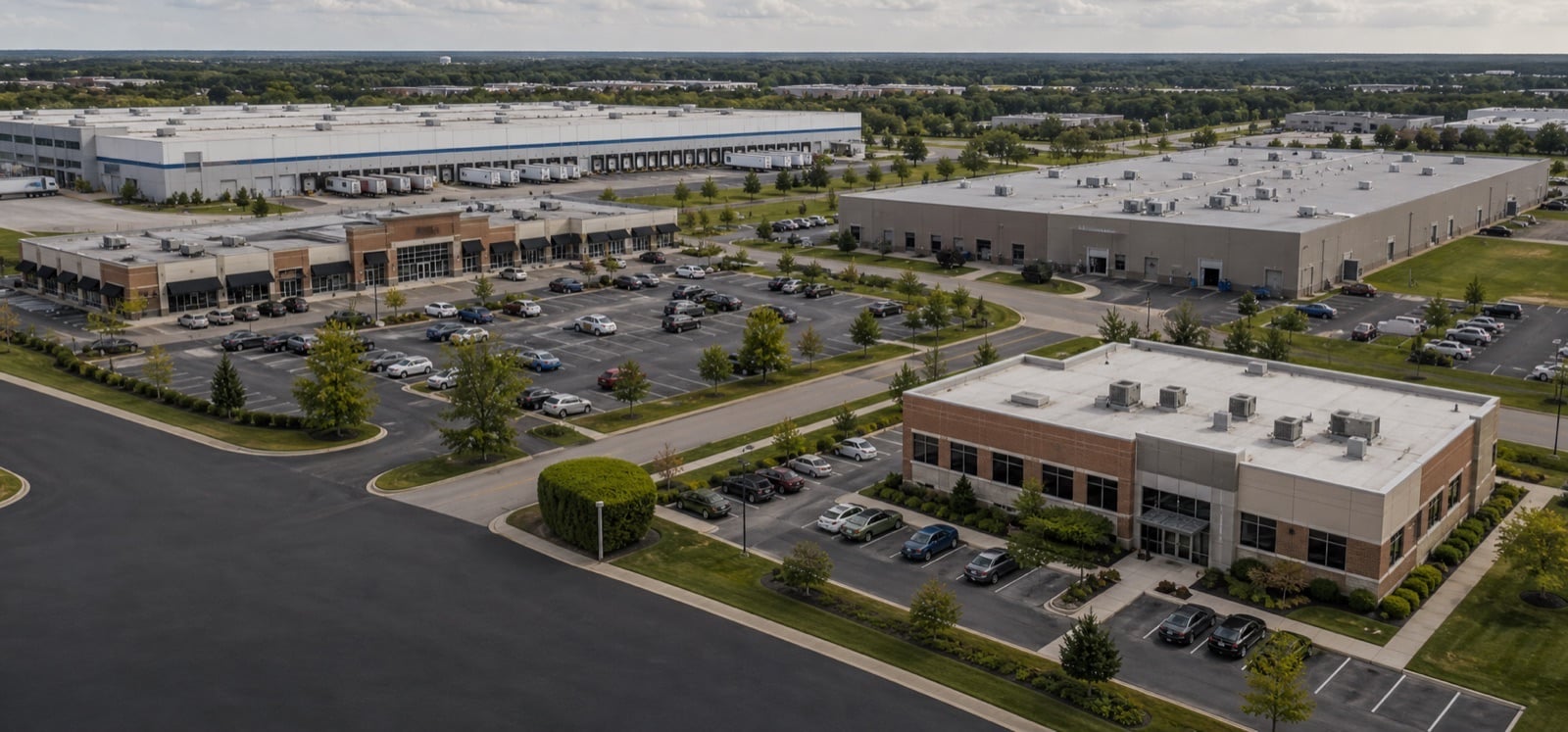
Warehouse and distribution scope
- 01Loading docks, overhead doors, concrete aprons, bollards, and impact repairs
- 02Large commercial roofs, drainage, envelope, and water-entry conditions
- 03Parking lots, trailer yards, truck routes, pavement, concrete, and striping
- 04Rooftop HVAC, make-up air, plumbing, electrical, lighting, and controls
- 05Employee restrooms, breakrooms, offices, floors, walls, and occupied interiors
- 06Multi-site repair lists and capital replacement programs
Define the full property outcome before work starts.
Protect material flow
Dock availability, yard routes, trailer schedules, shift changes, carrier access, and staging govern the work sequence.
Separate people and work
Pedestrians, forklifts, trucks, visitors, contractors, and active operations require clear routes and work-area controls.
Plan across the footprint
A roof, site, lighting, drainage, or HVAC issue may repeat across a large facility or portfolio and benefit from a program view.
Build a warehouse repair brief around the affected work area
For each issue, identify the dock, aisle, yard area or room involved. Keep the observed condition separate from the proposed repair so the scope can be reviewed before work is selected.
| Area | What to identify |
|---|---|
| Loading area | Dock number, damaged surface or equipment, available alternate docks and delivery windows. |
| Yard or concrete apron | Affected route, truck movements, drainage observations and areas available for staging. |
| Occupied interior | Operating shifts, inventory near the work, pedestrian routes and shutdown constraints. |
For location-specific requests, use the Elk Grove Village or Schaumburg commercial facility pages. Include related issues in one estimate request so access and phasing can be considered together.