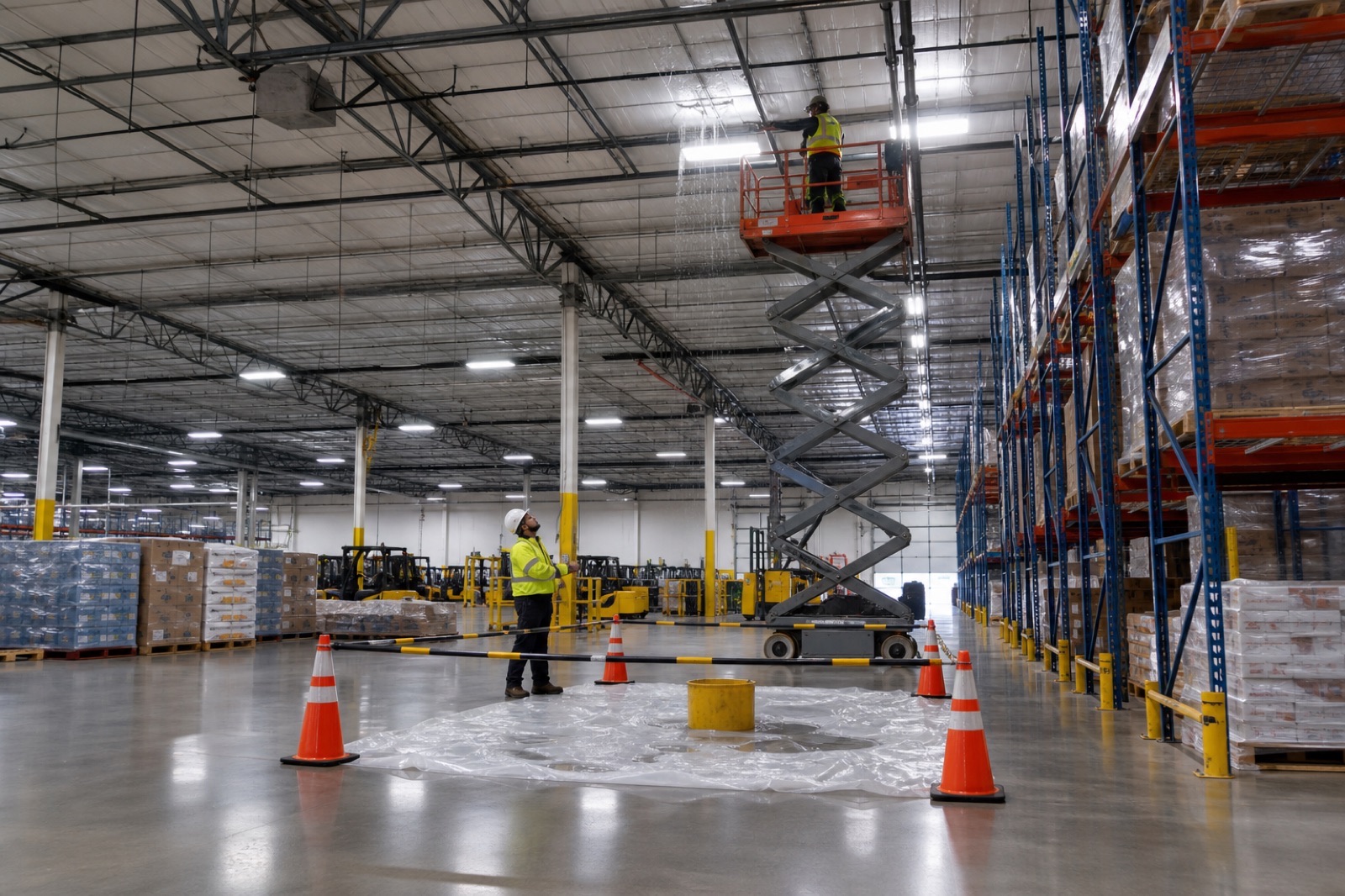
Emergency warehouse roof leak: first steps above inventory and active operations.
In a high-bay warehouse, even a limited leak can reach inventory, conveyors, chargers, electrical systems, or a primary aisle before the source is understood. The safe response protects the floor operation first, preserves evidence, and creates a controlled path to roof investigation and permanent repair.
Editorial and technical review: Meadow Services operating team · August 17, 2026
Barricade the affected footprint, address electrical or powered-equipment exposure, redirect traffic, protect people and goods, and designate one on-site contact before roof access begins.
Expect the source to be displaced
Water may move along deck flutes, insulation, purlins, pipes, joists, and ceiling systems. Interior drip location alone should not dictate where the roof is cut or patched.
Watch the repair after the weather changes
Record the work location, materials, photos, and test or observation conditions. Recheck the interior during the next relevant rain, wind, snowmelt, or freeze-thaw condition.
EDITORIAL METHOD
Planning guidance, not a substitute for the project record.
This guide helps a commercial property team organize a request and the next decision. Actual site conditions, adopted codes, manufacturer instructions, permits, contracts, qualified assessments, and approved project documents control the work.
Should employees go onto the roof during an active leak?+
Only personnel authorized, trained, equipped, and permitted by the property should access the roof. Wet, windy, icy, storm, electrical, edge, and unknown-deck conditions can make access unsafe.
Can the leak be patched from inside the warehouse?+
Interior collection can protect the operation temporarily, but it usually does not correct exterior water entry. Any temporary measure must avoid electrical, structural, fire-protection, and falling-object hazards.
What if the warehouse roof is under warranty?+
Locate the warranty and follow its notice and emergency-repair requirements as soon as practical. The warranty may specify approved contractors, materials, documentation, or inspections needed to preserve coverage.
Choose Emergency Request and send the warehouse address, on-site phone, active drip locations, affected inventory or equipment, roof access rules, photos from safe positions, weather timing, and warranty information if available.