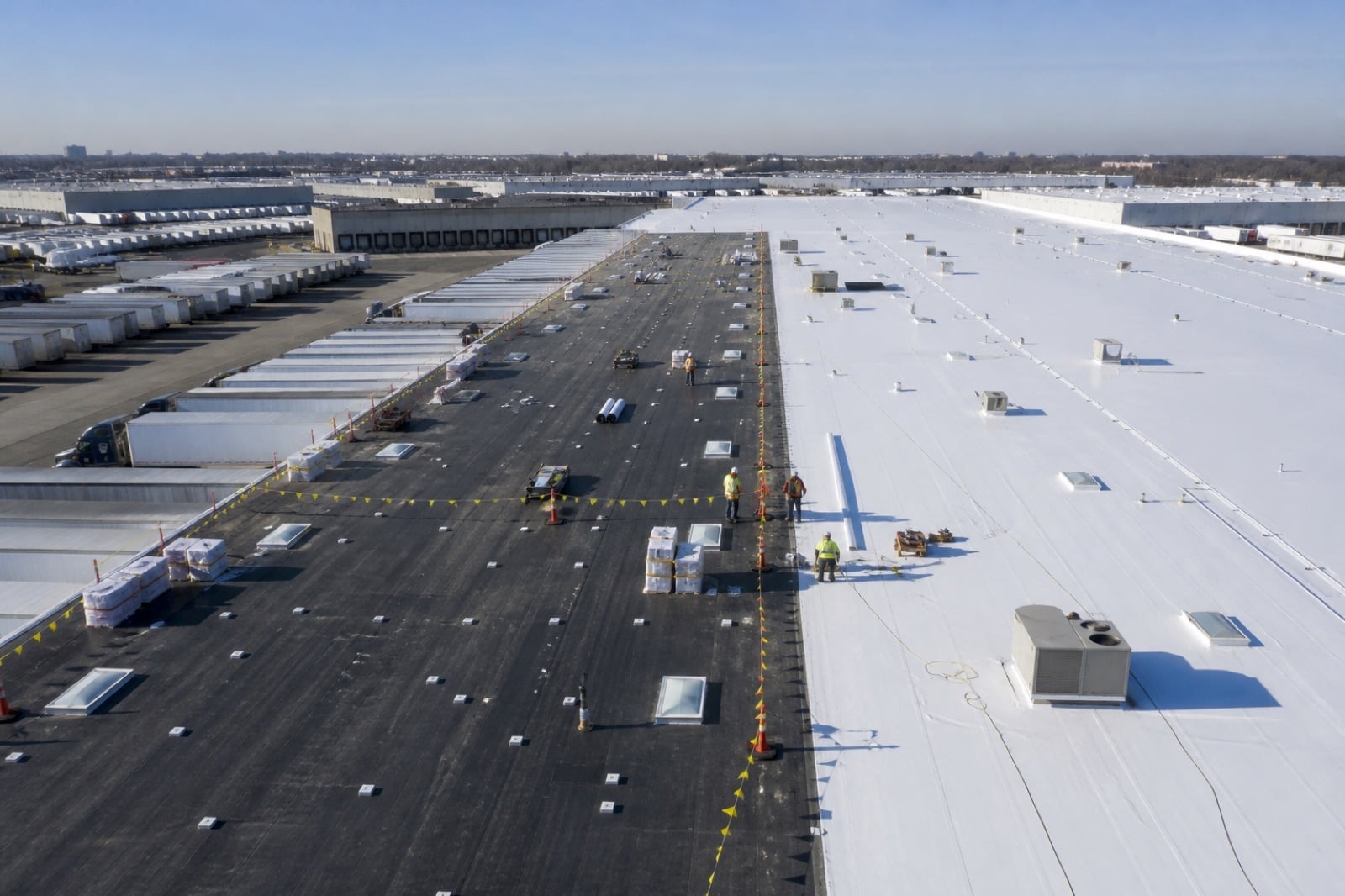
Warehouse roof repair and replacement planned around throughput below.
Warehouse roofs combine enormous area, repeated penetrations, long drainage runs, high-value inventory, dock activity, rooftop equipment, and operations that may run around the clock. Meadow develops the roof scope around condition by zone and the work happening beneath it—so repair, restoration, or replacement can be sequenced without treating the building like an empty box.
04Inventory protection, overhead exposure, dust, odor, noise, and daily dry-in
05Material loading, crane or hoist access, truck circulation, docks, and staging
06Phased repair, restoration, recover, tear-off, and replacement alternatives
Define the full property outcome before work starts.
Divide the roof into decisions
Age and performance can vary across additions, drainage basins, repair zones, and equipment areas. A zone-based condition picture is more useful than one average label for the entire roof.
Connect roof and operations
Work over racking, food or sensitive goods, charging areas, offices, docks, and high-traffic aisles may require different protection, hours, communication, or shutdown rules.
Plan the roof with the asset plan
Upcoming HVAC replacements, solar, penetrations, tenant changes, and ownership horizon can alter the best assembly, phasing strategy, and capital timing.
BUYER QUESTIONS
Questions about this commercial property need.
Can a warehouse roof be replaced while distribution continues?+
Often, but the feasible plan depends on the roof assembly, deck, interior exposure, inventory sensitivity, weather, material loading, staging, work hours, and the building's tolerance for noise, dust, odor, or overhead activity.
Should every section of a large warehouse roof be replaced at once?+
Not automatically. Distinct construction dates, moisture conditions, drainage areas, repair histories, and operational zones can support a phased plan when transitions and warranties are properly addressed.
What information helps estimate a warehouse roof project?+
Roof plans, measured area, assembly and age, core or moisture data, repair history, warranty documents, deck type, drainage, penetrations, access, operating constraints, and desired service life materially improve the estimate.
Share the warehouse address, approximate roof area and age, additions or roof zones, leak and repair records, roof warranty, operating hours, sensitive inventory areas, and target planning window.