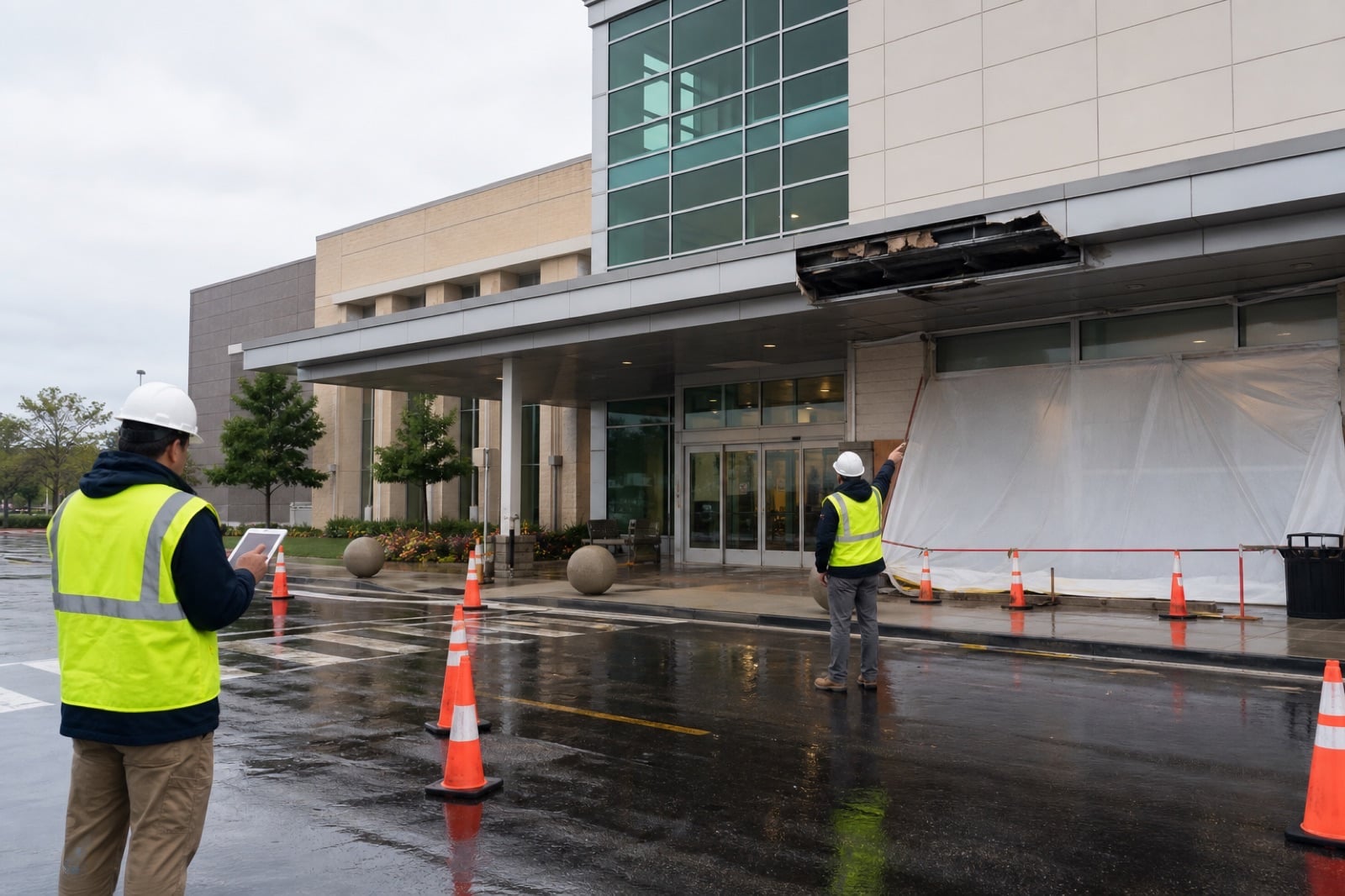
Emergency commercial repair checklist: protect people, operations, and the next decision.
The first hour should make the site safer and the problem easier to understand—not create a rushed permanent scope. Use this checklist to separate public-safety response from facility response, control the affected area, document what changed, and give the responding team enough information to choose the next step.
Editorial and technical review: Meadow Services operating team · August 17, 2026
06Property contact, access instructions, decision authority, insurance, and follow-up plan
How to use this planning guidance.
Use emergency services when the hazard requires them
Call 911, the fire department, gas utility, electric utility, or other public authority first for immediate threats to life, fire, gas, collapse, live electrical exposure, or conditions outside a facility contractor's safe role.
Do not trade evidence for speed
If it is safe, record the time, location, weather, alarms, visible condition, and what changed before temporary work hides the original evidence. Do not enter unsafe areas to obtain documentation.
Separate stabilization from permanent correction
A tarp, shutoff, barricade, extraction, or temporary closure may reduce immediate risk without defining the final cause or repair. Set a clear handoff for investigation and permanent scope.
EDITORIAL METHOD
Planning guidance, not a substitute for the project record.
This guide helps a commercial property team organize a request and the next decision. Actual site conditions, adopted codes, manufacturer instructions, permits, contracts, qualified assessments, and approved project documents control the work.
When should the property call 911 instead of Meadow?+
Call public emergency services first for an immediate threat to life, fire, suspected gas, collapse, live electrical danger, violence, or another condition requiring public-safety authority. Meadow does not replace emergency responders or utilities.
What photos are most useful during an emergency repair request?+
From a safe position, capture the overall area, approach and access, the visible condition, nearby equipment or building elements, interior and exterior relationship, and any asset labels. Do not climb, open energized equipment, enter water near electricity, or cross a controlled area for photos.
What happens after the immediate condition is stabilized?+
Confirm what temporary measures were installed, what remains unavailable or exposed, who is monitoring the condition, when a technical review will occur, and who will develop and approve the permanent repair scope.
Choose Emergency Request and send the property address, on-site contact and phone, current hazard, area affected, operating impact, safe access instructions, photos if safe, and actions already taken.