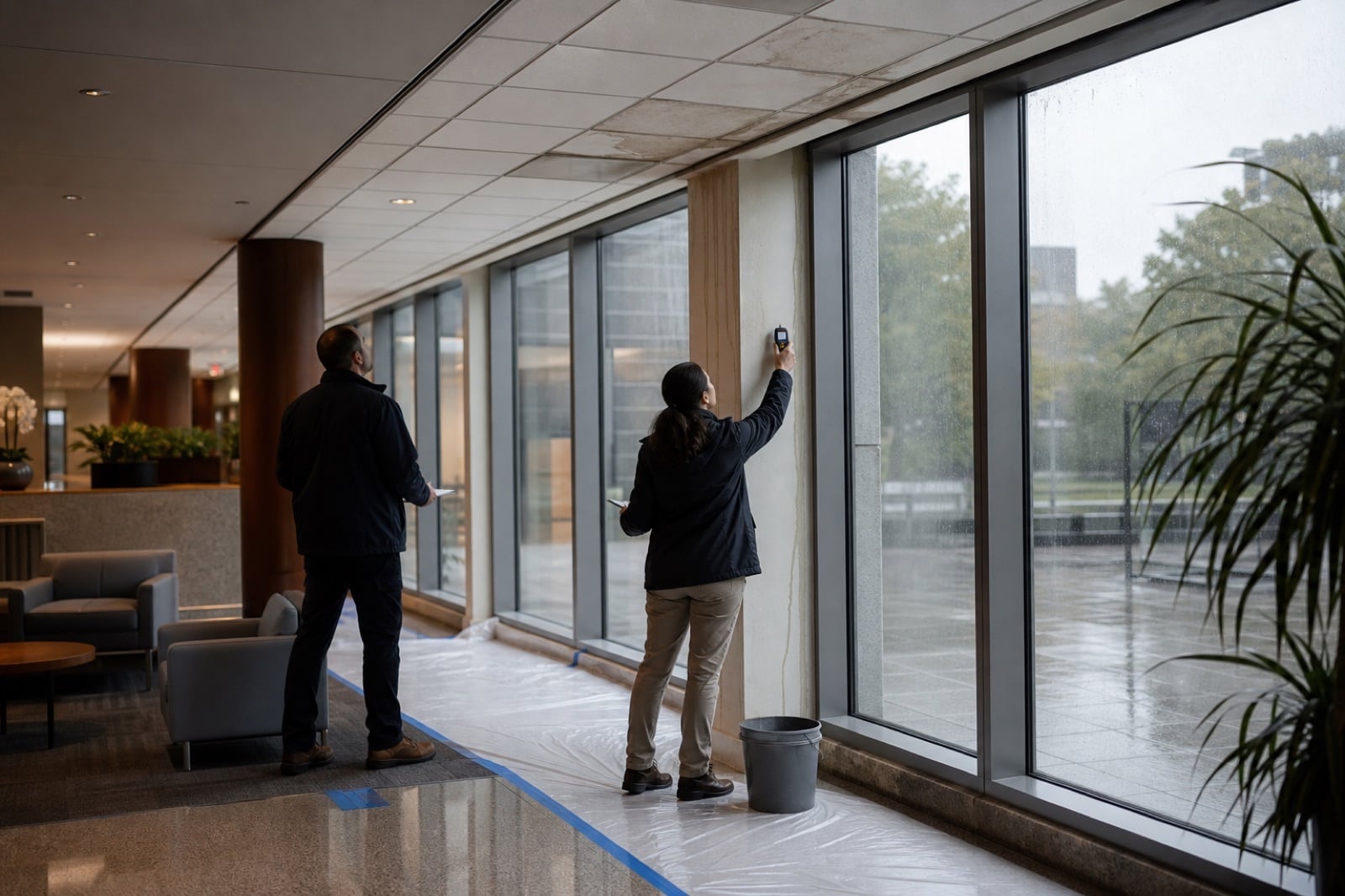
Commercial water intrusion: first steps before finishes hide the path.
Water at a ceiling, window, wall, floor, or doorway is evidence—not yet a diagnosis. The most useful first response protects occupants and contents, records the pattern, distinguishes active sources, and coordinates envelope, roof, drainage, plumbing, mechanical, and interior scopes without covering the evidence too soon.
Editorial and technical review: Meadow Services operating team · August 17, 2026
04Moisture mapping, selective investigation, safe containment, drying, and monitoring
05Electrical, indoor-environment, structural, slip, access, and occupied-space concerns
06Source correction, damaged-material restoration, documentation, and recurrence check
How to use this planning guidance.
Build a timeline, not only a photo
Record whether the condition follows wind-driven rain, long-duration rain, thaw, plumbing use, HVAC cycles, or no visible weather event. Timing often separates plausible sources.
Investigate assemblies as connected systems
Roof edges, wall transitions, copings, windows, sealant joints, drains, below-grade conditions, piping, and air-conditioning can deliver water to the same interior area through different paths.
Coordinate drying with source correction
Removing wet finishes can reveal the path and limit damage, but restoration should not permanently close the assembly until the source, remaining moisture, and required testing are addressed.
EDITORIAL METHOD
Planning guidance, not a substitute for the project record.
This guide helps a commercial property team organize a request and the next decision. Actual site conditions, adopted codes, manufacturer instructions, permits, contracts, qualified assessments, and approved project documents control the work.
Does a ceiling stain always mean the roof is leaking?+
No. Roof entry is one possibility, along with plumbing, drains, condensate, façade or window entry, fire-protection piping, and moisture condensation. The source should be investigated before the repair is assigned to one trade.
Should wet ceiling tiles or wall finishes be removed immediately?+
Safety, electrical exposure, material condition, contamination, occupied use, and the need to preserve evidence all matter. Qualified parties should determine safe containment, selective removal, drying, testing, and restoration.
How can recurring water intrusion be documented?+
Maintain a dated log with weather, location, photos, moisture readings when appropriate, affected materials, temporary actions, repair locations, and the outcome during the next comparable condition.
Send the address, exact affected area, first and recent photos, when the water appears, relevant weather or system use, building plans if available, prior repairs, and any immediate safety or operating impact.