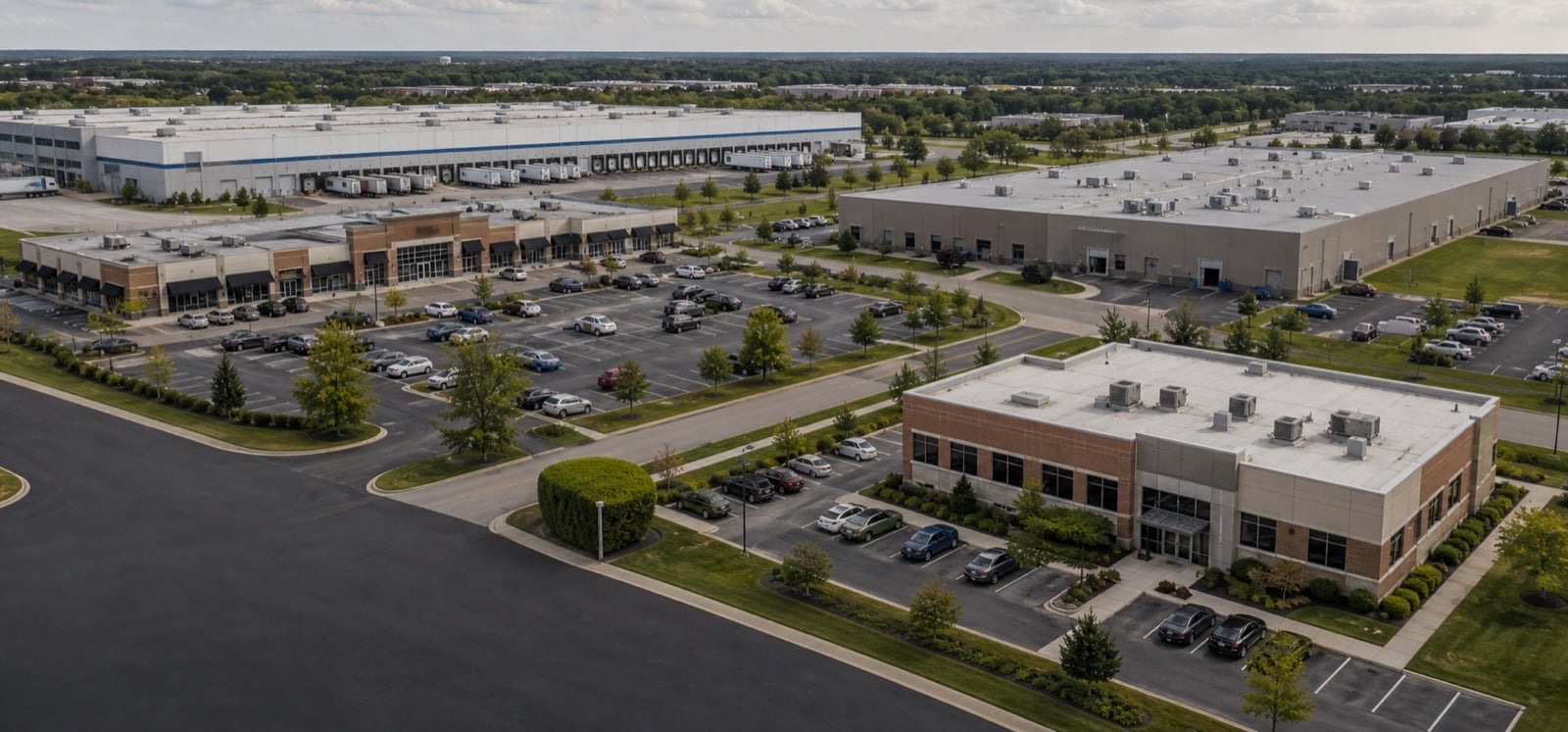
A seasonal field guide for Chicago commercial properties.
Chicago properties move through freeze-thaw, snow and ice, spring water, summer cooling demand, storms, heat, and fall preparation. The strongest seasonal plan watches transitions between systems rather than treating roof, site, envelope, mechanical, and access as separate lists.
Editorial and technical review: Meadow Services operating team · August 17, 2026
Commercial properties onlyBuilt around facility responsibility
One accountable relationshipFrom request through completion
Scope before assumptionsProperty conditions and constraints matter
Season-by-season property review
01Winter: active leaks, freeze risk, snow and ice impacts, doors, heat, drains, and emergency access
02Spring: roof and envelope observations, drainage flow, pavement failures, concrete movement, and water-entry history
03Summer: cooling performance, rooftop equipment, paving and concrete work windows, storms, and occupied-space projects
04Fall: roof drains, gutters, flashings, doors, heat readiness, exterior lighting, site drainage, and winter planning
05After major weather: visible damage, active water, blocked routes, displaced materials, ponding, and new interior symptoms
06Before capital planning: repeat conditions, seasonal failures, repair history, budgets, and best execution windows
How to use this planning guidance.
Record conditions when they occur
Photos, exact location, weather, timing, direction, temperature, and operating status can make a later investigation much more useful.
Watch system transitions
Roof-to-wall, pavement-to-drain, door-to-threshold, equipment-to-curb, pipe-to-exterior, and concrete-to-asphalt interfaces often reveal the cause.
Prioritize active risk
Life safety, fire access, electrical exposure, active water, structural concerns, ice, loss of heat or cooling, and insecure openings need immediate appropriate escalation.
EDITORIAL METHOD
Planning guidance, not a substitute for the project record.
This guide helps a commercial property team organize a request and the next decision. Actual site conditions, adopted codes, manufacturer instructions, permits, contracts, qualified assessments, and approved project documents control the work.
BUYER QUESTIONS
Questions to resolve before the next decision.
Is this a substitute for a professional building inspection?+
No. It is a property-team observation guide. Conditions involving structure, engineering, life safety, code, electrical hazards, or specialized systems require the appropriate qualified review.
What should I photograph after a storm or freeze?+
Capture the wide area, close condition, exact location, nearby drains or transitions, interior and exterior relationship, and any change over time—without entering unsafe areas.
When should a seasonal issue become a capital project?+
Repeated failures, widespread deterioration, poor performance, escalating risk, limited repair life, or an expiring planning window can justify a repair-versus-replacement review.