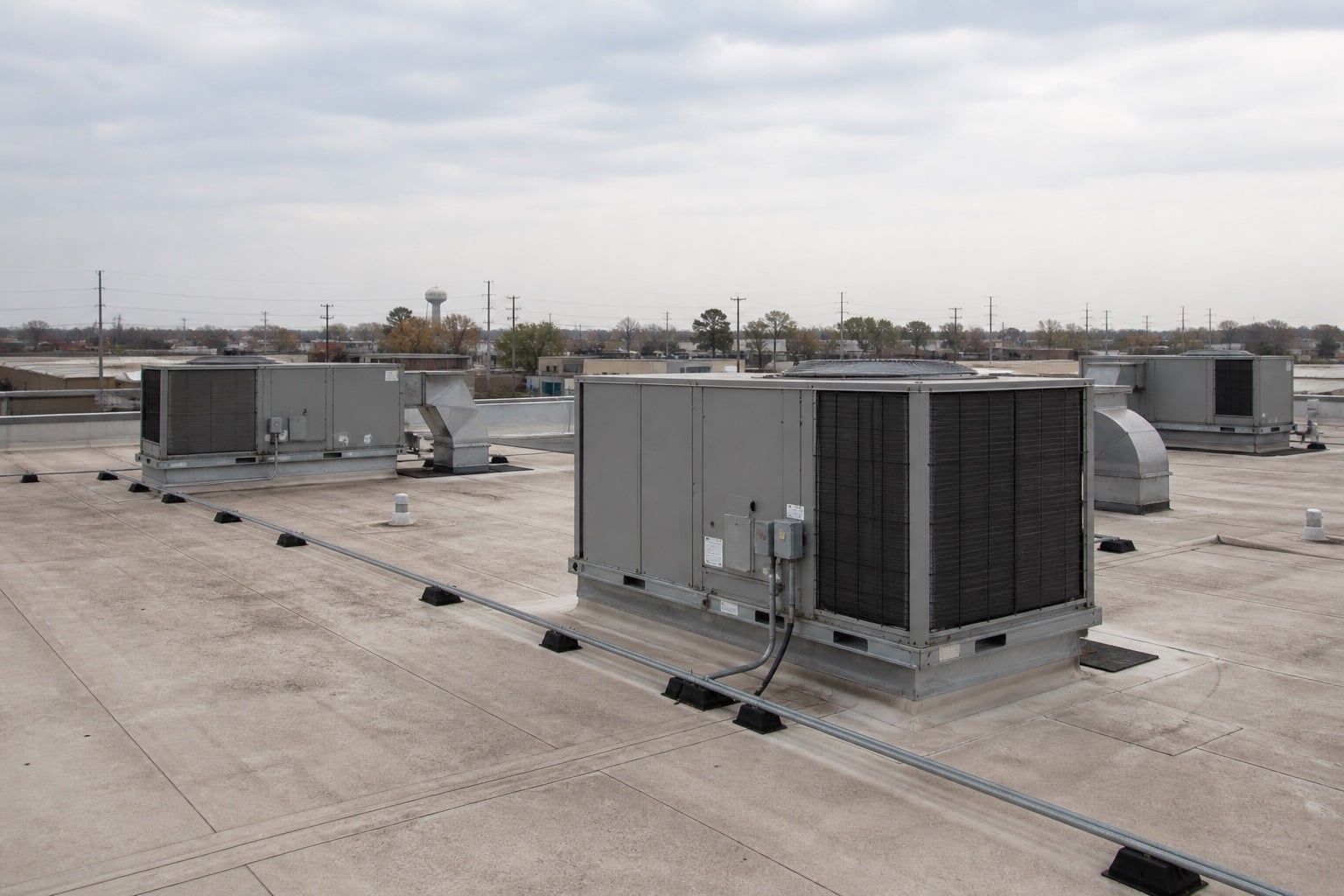
Commercial roof replacement built around conditions, operations, and the whole envelope.
A commercial roof project should address more than field membrane. Meadow frames replacement around existing assembly, drainage, penetrations, perimeter conditions, rooftop equipment, occupied operations, access, weather, and the performance the owner expects from the new system.
02Membrane, insulation, deck, vapor control, edge metal, flashings, and transitions
03Drains, scuppers, overflow, slope, ponding, and site discharge interfaces
04Equipment curbs, penetrations, piping supports, walk pads, and service traffic
05Staging, material loading, occupied-space protection, and daily dry-in
06Warranty requirements, inspections, documentation, and closeout
Define the full property outcome before work starts.
Investigate before selecting
Core cuts, moisture information, deck conditions, drainage, code requirements, and existing warranties can change the right assembly and scope.
Coordinate rooftop systems
HVAC, electrical, gas, piping, access, and future equipment plans should be reviewed before the new roof is locked in.
Plan for Chicago weather
Temperature, wind, precipitation, freeze-thaw, snow, and seasonality affect materials, staging, phasing, and daily protection.
BUYER QUESTIONS
Questions about this commercial property need.
Can a leaking commercial roof be repaired instead of replaced?+
Sometimes. The decision depends on age, assembly condition, extent of moisture, deck condition, drainage, repair history, warranty, and how much useful life a repair can reasonably restore.
Can roof work continue while the building is occupied?+
Often, but access, odor, noise, dust, overhead protection, sensitive operations, loading, and emergency dry-in procedures must be planned.
Should rooftop equipment projects be coordinated with reroofing?+
Yes when practical. Curbs, penetrations, access, flashing, future replacement timing, and warranty requirements create direct roof-mechanical interfaces.