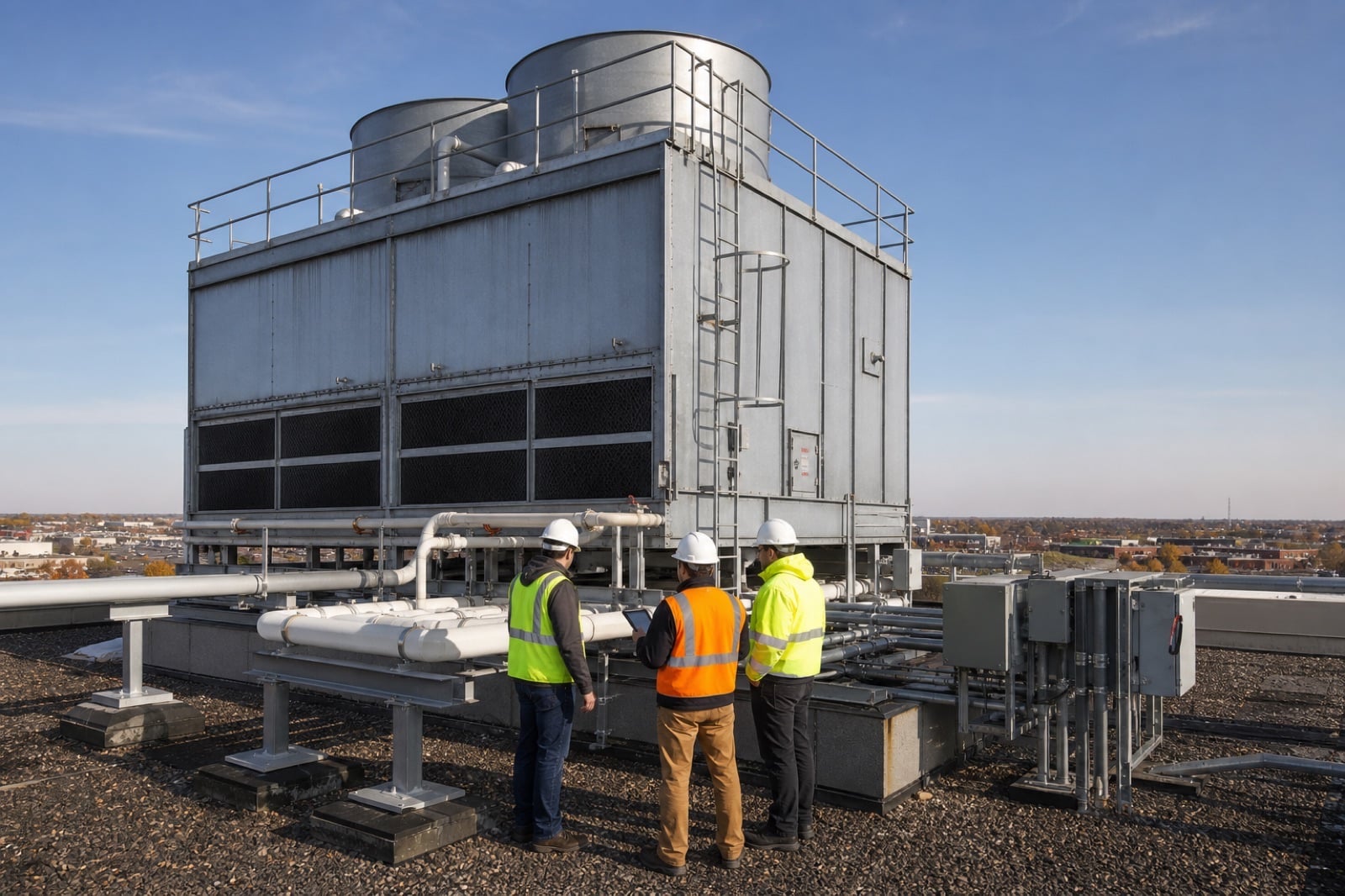
Cooling tower replacement planning: the decisions to settle before the lift.
The crane day is visible; the months of decisions behind it are not. A replacement plan needs a verified equipment basis, current operating requirements, qualified design input where required, a route for removing and setting equipment, and a shutdown and startup sequence the building can tolerate.
Editorial and technical review: Meadow Services operating team · August 17, 2026
A like-for-like label is not enough. The responsible design and operating parties should verify duty, configuration, redundancy, materials, controls, acoustics, water treatment, and future requirements before equipment is released.
Walk the entire physical route
Delivery, street or lot access, crane setup, swing and reach, roof loading, removal path, staging, piping tie-ins, electrical route, and service clearances should be field-checked together.
Write the shutdown backward from startup
Temporary cooling, drain-down, isolation, weather, treatment, cleaning, fill, controls checkout, balancing, commissioning, and operator turnover define the true outage—not only the equipment setting.
EDITORIAL METHOD
Planning guidance, not a substitute for the project record.
This guide helps a commercial property team organize a request and the next decision. Actual site conditions, adopted codes, manufacturer instructions, permits, contracts, qualified assessments, and approved project documents control the work.
How early should cooling tower replacement planning begin?+
Begin before the desired outage season. Equipment availability, engineering, permits, structural review, crane planning, utility interfaces, water treatment, and operating-window approvals can govern the schedule.
What should be verified before ordering a replacement tower?+
At minimum, verify duty, configuration, materials, dimensions, weights, support points, service clearances, piping, power, controls, water treatment, sound requirements, access, code obligations, and the responsible party approving the basis of design.
Who determines whether engineering is required?+
The project team should identify applicable code, permit, structural, mechanical, electrical, and owner requirements. Any professional design or stamped analysis must be completed by appropriately licensed professionals.
Send the tower make and model, nameplate and photos, service history, known design data, piping and electrical information, roof or structural documents, redundancy, access limits, and acceptable outage window.